Sixth in the series: The Post-Photographic Shift Content Over Craft
The standard for assisted imaging asks how an image was made. The question that matters is whether it was worth making.
At some point in every serious conversation about computational assisted imaging, someone asks: but how do you judge AI-assisted work?
The question sounds open. It is usually a closing move, a way of suggesting that because the familiar measures do not apply, no measures can. The implied claim is that if the work cannot be evaluated by its process, it cannot be evaluated at all. This is not a genuine problem with the work. It is a failure of the evaluative approach applied to it.
The approach needs to change. Not because standards do not matter, but because the standards currently being used are measuring the wrong things. A standard that measures the wrong things will always produce the wrong answers.
What the current standard is actually measuring
When an open call excludes AI-assisted work by policy, or a gallery declines to represent an AI artist, regardless of what the work does, the decision is being made on process rather than outcome. The question being asked is not: what does this work communicate, and how well does it do so? The question is: was this made correctly?
That is a coherent standard for certain contexts. Documentary photography has legitimate reasons to demand process transparency: the relationship between the image and the event it records is the work’s central claim, and that claim depends on how the image was made. Photojournalism without standards of process is not photojournalism.
But fine art photography is not photojournalism. The fine art photograph does not make a claim about what happened. It makes a claim about what the artist sees, feels, or wants the viewer to consider. And claims of that kind are not validated by process. They are validated by whether the work has delivered on them.
A painting by Francis Bacon is not evaluated by whether the paint was applied correctly. A sculpture by Louise Bourgeois is not dismissed because she used industrial fabrication methods her critics did not expect. The question asked of both is whether the work is doing something worth doing, and whether it is doing it with sufficient intelligence and force.
That question applies to photography too. It always has. The process standard is a historical artifact of photography’s specific relationship to truth, useful in some contexts, misapplied in others, and badly misapplied when extended to AI-assisted fine artwork as a blanket exclusion.
Four questions worth asking
What follows is not a formula. It is a set of questions that can be asked of any serious photographic project regardless of the tools used to produce it. They are the questions that serious criticism has always asked, stated plainly enough to be used.
1. Does the work have a clear creative intention, and does it deliver on it?
This is the foundational question and the hardest to fake. A body of work either has a governing purpose or it does not, and the difference is visible. Intention is not a statement in an artist’s note; it is something the work itself demonstrates through the consistency of its choices, the coherence of its visual language, and the relationship between what the work proposes and what it achieves.
AI-assisted work that generates images without a governing intention produces results that look like exactly that: capable surfaces with nothing underneath. Work produced with genuine artistic intent shows the same qualities it always has: purposeful selection, a developed visual sensibility, and a consistent relationship between form and meaning. The tool does not determine whether intention is present. The work does.
2. Does it engage with the history of the medium?
Photography has a century and a half of accumulated history behind it. An artist working seriously within or against that tradition shows an awareness of where the work sits in relation to what came before. That awareness is not a display of scholarship. It is the natural consequence of having looked carefully at photography over time.
This does not mean every work needs to announce its influences. It means there is a difference between an artist who has developed their work with genuine understanding of the medium’s possibilities and one who has produced technically sophisticated images without any relationship to photographic history or tradition. That difference is visible in the work, and it is a legitimate test.
3. Where is the artist in the decisions?
The authorship question that AI-assisted work is supposed to make unanswerable is, in practice, not difficult at all. It requires looking at the decisions rather than the process.
The choices of dataset, model, prompts, selection process, post-processing, and sequencing into a body of work are all decisions, and decisions have authors. An artist with a developed body of work leaves a visible trace through every stage of that process. The resulting work looks like their work and no one else’s. For the same reason a Hirst spot painting looks like a Hirst and not a copy, the governing intelligence behind the system is present in the output.
Where that intelligence is absent, where the images could have been generated by anyone with access to the same tool, the work fails this test. Not because it was made with AI, but for the same reason a technically flawless but visually generic straight photograph fails: no artist is visible in it.
4. Does the work ask something of the viewer?
The last question is in some ways the simplest. Art that asks for nothing of the viewer decorates. Art that asks something does more than that: it requires attention, rewards looking, and poses a question the viewer did not bring to it.
This is not a demand for difficulty. Some of the most demanding work is formally simple. It is a demand for genuine engagement with the viewer as a participant in making meaning rather than a passive recipient of a finished surface.
What the standard asks
AI-assisted work capable of meeting this standard exists. Work capable of meeting all four of these standards exists. The fact that it is being excluded from serious institutional consideration based on its process alone is not a quality filter. It is a category error being maintained past the point where it can be justified.
Applying these questions asks more of an institution than a blanket ban does. It asks for the work to be looked at, which is what serious curatorial judgment has always required. The four questions are not the only way to build such a standard. They are an invitation to build one.
The conversation about what AI-assisted photography can be is happening whether institutions take part or not. The artists are working. The bodies of work are accumulating. The history traced in the earlier articles in this series is running its course again, with the same predictable shape.
The question for anyone in a position to make decisions is the same one it always has been: what are you actually looking at, and what does it do?
Content Over Craft is sixth in The Post-Photographic Shift series, a reasoned case for vision over method in photographic art.
Acknowledgements
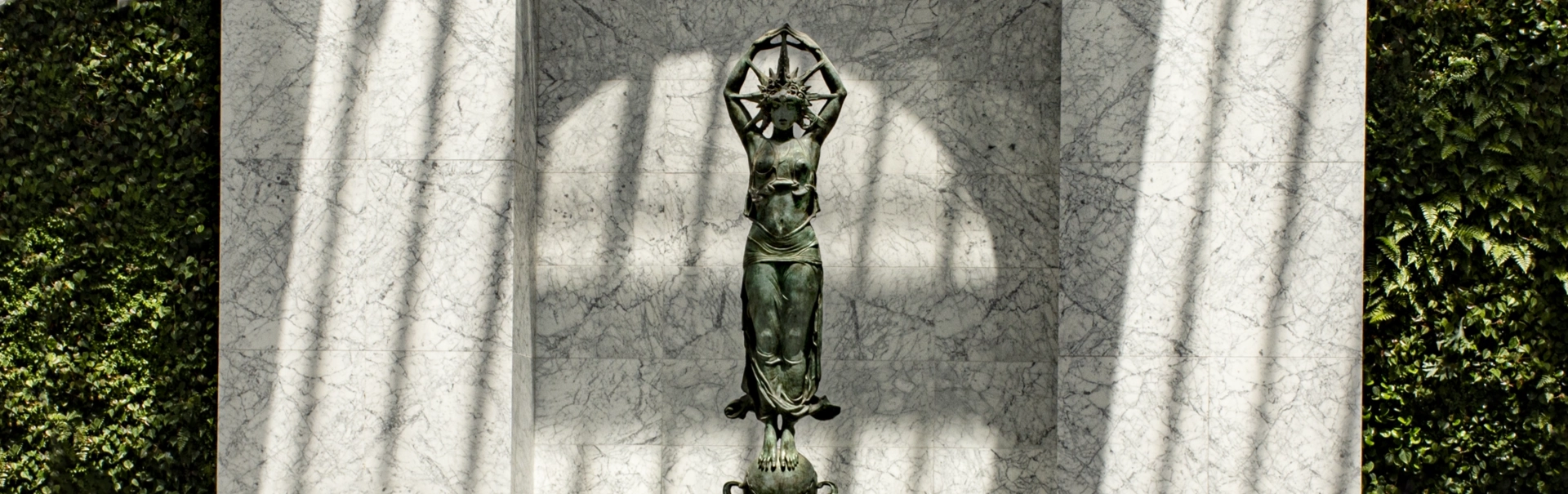
1 Top Banner: Cropped Content Over Craft Installation (2025) Private Collection