Fourth in the series: The Post-Photographic Shift From Canvas to Code
Photography spent the better part of a century fighting to be taken seriously as art. This article traces how photographers got through the door, and why they have been so quick to forget the way in.
There is a particular kind of institutional confidence that only comes from having already secured its position. The gallery that sets the standard, the critic whose vocabulary defines the conversation, the collector whose acquisitions shape the canon. These are positions built on a history of having been right, or at least of having survived long enough that the question of rightness no longer comes up. What that confidence tends to obscure is the moment, often not so long ago, when the institution was on the other side of the argument. When it was the one being told that its values were wrong, its tastes inadequate, its medium insufficiently serious.
Photography is in exactly that position now. And it has almost entirely forgotten how it got here.
The tool that couldn't be art
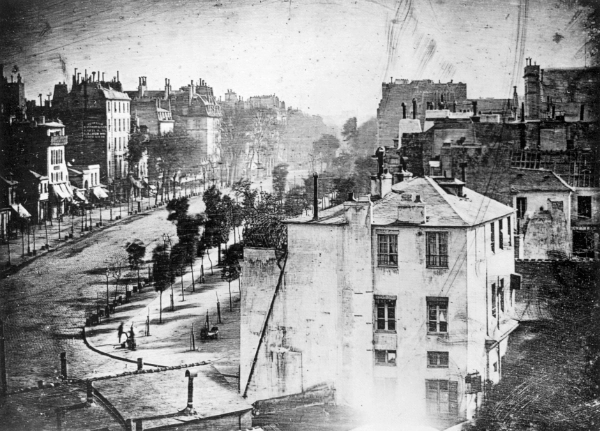
When the daguerreotype was announced in Paris in 1839, the painter Paul Delaroche is reported to have said that from that day, painting was dead. The remark has been quoted often enough that its accuracy barely matters. What it captures is how photography's arrival landed among the established arts, not as a curiosity to admire, but as a threat to the order that existed.
The painters' concern was immediate and economic. Photography could produce in minutes what took skilled artists days or weeks. It could capture a likeness with a precision that no human hand could match. Portrait painters who had built livelihoods on their ability to render faces accurately found that accuracy suddenly commodified. The camera had taken something that required years of training and made it mechanical, reproducible, and cheap.
But the response from the art establishment went further than economic anxiety. Photography, critics and academics argued, was not and could not be art. It was a mechanical process. The machine did the work. There was no creative decision between the operator and the image, no interpretation, no vision, only a chemical reaction to light. The photograph was a document, not an expression. A record, not a work.
Those arguments were made with complete sincerity by people who had every reason to believe they knew what art was. They were wrong, and it took decades for that to become undeniable.
How photography got through the door
The acceptance of photography as fine art did not happen through argument alone. It happened through the accumulated pressure of photographers who refused the limitations being placed on them, critics who recognized what the work was actually doing, and eventually institutions that could no longer justify the exclusion.
Alfred Stieglitz was central to this in America. Through his galleries, first 291, later An American Place, and through the publication Camera Notes and then Camera Work, he built a critical infrastructure for photography as fine art. He published reproductions alongside modern painting and sculpture, positioning the photograph not as a lesser document but as a fully realized aesthetic object. He argued, in print and in exhibition, that the photograph required the same qualities of vision, intention, and intelligence as any other serious art form.
The resistance he faced from established institutions was real and sustained. Photography's admission to the fine art canon was not granted. It was forced, incrementally, by the weight of evidence that could not be dismissed and by the critical vocabulary that made that evidence clear.
That is how it works. The institution does not open the door. Artists and advocates build a case compelling enough that keeping the door closed becomes more embarrassing than opening it.
The tool is always the argument
The pattern holds across every episode of this kind. The Impressionists outside the Salon. Photographers outside the galleries. Digital artists outside the auction houses. In each case the resistance was framed as aesthetic but driven by something else, by the threat to established hierarchies of skill, by the disruption of markets built on scarcity and craft, by the fear that if the new tool is legitimate, the old tool loses its authority.
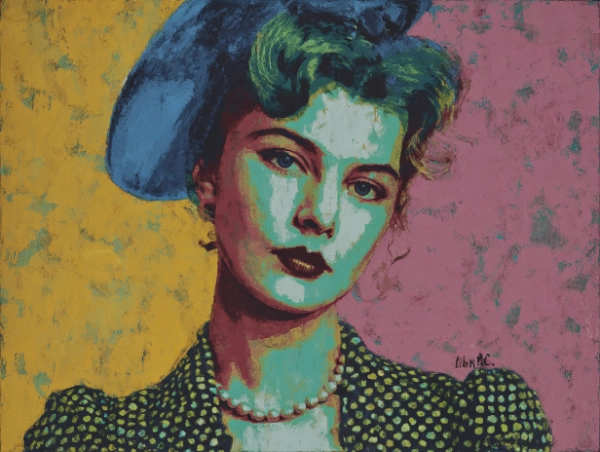
In painting, the resistance was internal, about approach, about what a painting owed its subject. With photography, and now with AI, the resistance turns categorical: the tool itself is declared illegitimate.
The actual argument is almost never about the quality of the work. It is about what the tool implies. If photography can produce art, then the years spent developing draftsmanship count for less. If digital processes can produce art, then the darkroom's authority is diminished. If AI can produce art, then the camera itself, the instrument that finally won photography its place, becomes one option among many rather than the defining condition of the medium.
Each of these threats is real in the sense that it genuinely disrupts existing hierarchies. What it is not is an aesthetic argument. Whether the camera diminishes draftsmanship has no bearing on whether a photograph is art. Whether AI diminishes the camera has no bearing on whether an AI-assisted image is art. The tool's implications for the existing order are not a standard by which the work should be judged.
But they are, consistently and across the full history of this pattern, the real source of resistance. The aesthetic objection is the form the institutional resistance takes when it needs to sound principled.
The mirror photography will not look into
Here is the irony that the current debate cannot quite bring itself to name.
Photography spent the better part of a century fighting for serious artistic consideration, not universally, and not without exceptions, but as a medium whose claims to fine art status remained contested in the institutions that set the standard. The camera did the work. There was no authentic vision, only a reaction to light. The image was produced by a process, not made by a hand. These were the terms of photography's exclusion, and they were wrong.
They are also, almost word for word, the terms in which AI-assisted photography is being excluded now. The algorithm did the work. There is no authentic vision, only a reaction to a prompt. The image is produced by a process, not made by a hand. A medium that was admitted to the fine art canon by dismantling exactly this argument is now deploying it against the next arrival. That is not a principled position. It is institutional memory working in reverse, using the logic of the old gatekeepers rather than the logic that got the door open.
The case that won photography its place was not "this process is sufficiently like painting." It was "vision and intention matter more than the tool that delivers them." That case was right then. It remains right now.
What the pattern predicts
The history of new tools in art has one consistent outcome. The resistance that greets each new medium eventually gives way, not because the critics change their minds but because the work accumulates until dismissal requires more effort than engagement. The artists who survived the exclusion period are the ones who kept working regardless of whether the institution was watching.
That is where AI-assisted photography is now. The exclusion is real. The blanket bans in open calls, the gallery language, the collector hesitation. These are not trivial obstacles, and they have real consequences for artists trying to build sustainable practices. But they are also consistent with how every significant tool has been received. And they have, in every prior case, proven temporary.
The question for institutions, critics, and collectors is the same one it always has been: do you want to be part of establishing what this work becomes, or do you want to explain later why you were not?
From Canvas to Code is fourth in The Post-Photographic Shift series, a reasoned case for vision over method in photographic art.
Acknowledgements
1 Top Banner: Cropped Camera Zoom Burst on a Microsoft Computer Keyboard in Tuntorp 4 by W. Carter, June 15, 2023.
Camera zoom burst on a black Microsoft Wired 600 computer keyboard with Swedish language characters. The keyboard was lit by two normal desk lamps. Different zoom speeds, starting and ending points were explored, giving widely different patterns and effects. Photographed in Tuntorp, Brastad, Lysekil Municipality, Sweden. CC BY-SA 4.0, via Wikimedia Commons.
2 Boulevard du Temple, Paris, 3rd arrondissement | Louis Daguerre.
Made between 24 April 1838 and 4 May 1838 (or possibly 1837). This is believed to be the earliest photograph showing a living person. It is a view of a busy street, but because the exposure lasted for 4 to 5 minutes the moving traffic left no trace. Only the two men near the bottom left corner, one apparently having his boots polished by the other, stayed in one place long enough to be visible. As with most daguerreotypes, the image is a mirror image. Archival photograph in the public domain, via Wikimedia Commons.
3 Woman with a Hat (2025) | Anonymous
Original photograph embellished with the help of an AI