First in the series: The Post-Photographic Shift Photography's Dilemma
How the documentary ethic became a fine art standard, and what photography lost in the transition.
Photography entered the world making a promise no other medium had made before: it would show you exactly what was there. Not a version of it, not an interpretation. The thing itself, arrested in light and silver.
That promise built the medium's authority. It also quietly set its limits.
Photography's dilemma has always been the same one. What the camera is, and what artists want to do with it, have never been entirely compatible. That tension has produced some of the most interesting work the medium has made. It is producing more right now.
The camera as witness
The expectation photography carried from the beginning was unlike anything painting had ever been asked to hold. When a photograph appeared in a courtroom or a newspaper in the 19th century, it was treated as something closer to fact than to image. The camera had pointed at something real. The result was evidence, not interpretation. That authority came with a corresponding responsibility. If the photograph was evidence, the photographer was a witness, and witnesses were not expected to editorialize.
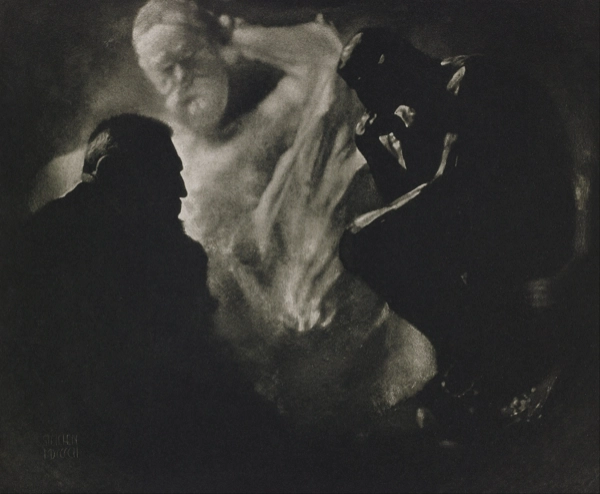
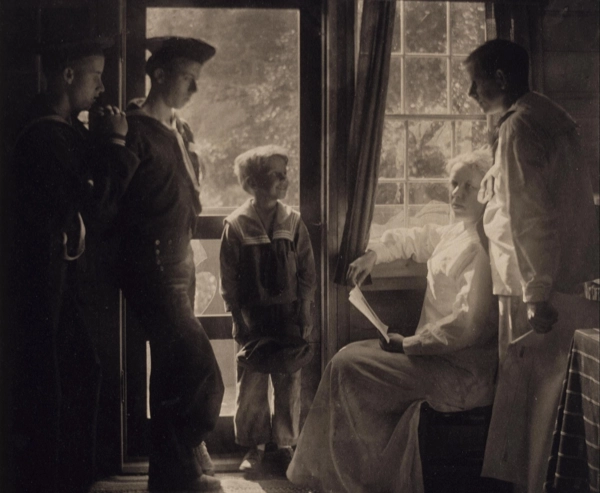
The Pictorialists, an international movement of the late 19th and early 20th centuries who fought to establish photography as a fine art by making images that looked and felt like paintings, had tested that boundary and been turned back. They manipulated their prints to resemble paintings, softening edges and adding texture to argue for photography's place in the established fine arts. The response from the established critical and gallery establishment was pointed: photography that looked like painting was photography betraying its nature. The camera's job was to see, not to interpret.
The documentary tradition grew out of that responsibility. Photographers like Lewis Hine, recording child labor in American factories, or Jacob Riis, documenting tenement life in New York, understood that the camera's apparent neutrality was itself a form of argument. They worked with deliberate restraint. The less the photographer imposed, the more the subject could speak. The image served the truth of the situation, not the vision of the person holding the camera.
That ethic was exactly right for what it was doing. Social documentary photography needed credibility, and credibility required restraint. But something happened as those values migrated from journalism and documentary practice into the fine art gallery. Once there, they were stripped of the urgency that had given them meaning. The restraint that had been a tool became a standard. Standards, unlike tools, outlast their purpose.
The creed of the unmanipulated image
By the early 1930s, a group of photographers working in California had turned documentary discipline into something closer to a manifesto. Group f/64 gathered Ansel Adams, Edward Weston, Imogen Cunningham, and others under a shared aesthetic philosophy named for the aperture setting that renders the entire frame in sharp, unforgiving focus.
They were reacting against the Pictorialists, and the reaction had genuine integrity. Photography had spent its early decades trying to borrow legitimacy from painting, and Group f/64 argued it did not need to. Let the medium do what only the medium can do.
That restraint was a virtue. That manipulation was a compromise. That the camera's relationship to the visible world was photography's defining value. These were the assumptions that lived inside that argument, and they would follow photography into the gallery long after anyone remembered why they were there. They were not natural laws. They were aesthetic choices made in a specific moment for specific reasons, and over time they hardened into a standard applied far beyond the conditions that produced it.
What we never asked of painters
While straight photography codified its standards in California, the broader art world had already spent half a century answering the same question differently.
No one asked the Impressionists to paint what they saw.
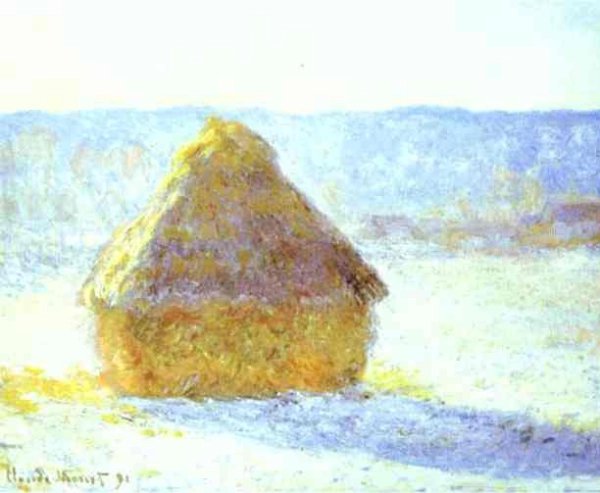
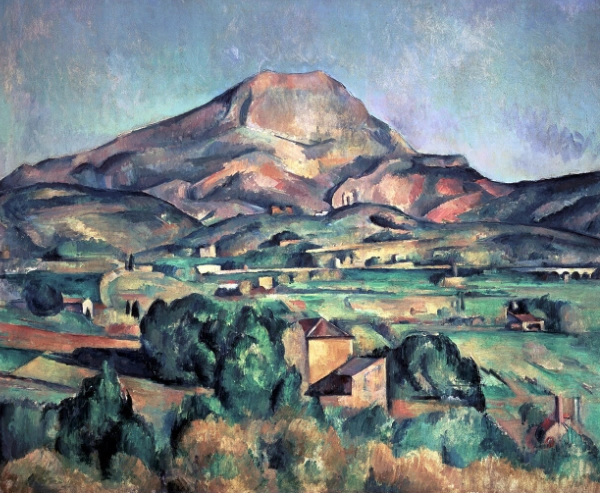
When Monet dissolved the surface of a haystack into season and light, no critic demanded he paint the haystack more accurately. When Cézanne broke the geometry of Mont Sainte-Victoire into planes of color that had nothing to do with the mountain's actual appearance, no one suggested he was failing at representation. The value of those paintings lay entirely elsewhere: in the quality of perception behind them, in what the artist chose to see and how they chose to render it.
The Impressionists faced resistance, of course. But that resistance was aimed at their style, not at painting's legitimacy as a medium. No one questioned whether painting itself was a serious art form because certain painters were departing from literal representation. The medium was wide enough to hold both Ingres and Monet, both the documentary and the expressive, without either approach having to invalidate the other.
Painting had that latitude. Photography never did. The camera's mechanical relationship to reality kept pulling the conversation back toward fidelity, even in contexts where fidelity was irrelevant to what the artist was attempting. A photographer staging a scene, compositing images, or using digital tools to construct rather than capture became accountable to a standard that painters working in identical conceptual territory were never asked to meet.
That asymmetry is photography's dilemma. It is not a technical problem. And it is not a recent one.
The line that has always been contested
Something is shifting now, visibly enough that it is hard to ignore. The distinction between a photographer and a photographic artist, between someone who records and someone who constructs, is less settled than it ever was. Artists working across digital compositing, conceptual staging, darkroom experimentation, and AI are using the camera not as a truth machine but as one element in a larger process. The photograph is no longer necessarily the end of the work. In some practices, it is barely the beginning.
What these artists are doing is not philosophically new. The darkroom itself was always a place of interpretation, of decisions about contrast, exposure, and tone that shaped the final image as surely as any digital tool. The desire to stage, manipulate, and construct is as old as the medium itself. The Pictorialists proved that. What is new is that the tools are visible enough, and the departures from straight photography significant enough, that the conversation can no longer be deferred.
The question that conversation must answer is a simple one: why should a photograph's artistic value be measured by standards that no other visual art form is asked to meet?
If the answer has to do with truth, then we need to be honest about the fact that photography's relationship to truth has always been more complicated than the standard assumes. If the answer has to do with tradition, then we need to look carefully at which tradition is actually being protected. The straight photography creed, the belief that the unmanipulated image was photography's highest form, is one thread in the medium's history, not its full inheritance.
That moment has a name. This is the post-photographic shift, and this series is its argument: that the standards photography applies to the work being made inside it were never the right ones.
The dilemma is a choice
The tradition that came to dominate fine art photography was never the only one available. That tradition was chosen, constructed, and defended by specific people with specific aesthetic commitments at a specific moment. It produced remarkable work and it generated a rigorous critical tradition. It also narrowed, over decades, into a set of standards that the medium has been pushing against ever since.
Recognizing that is a step toward a more honest account of what the medium has always been. The most restrictive standard in photography's history is not the same as its most defining one.
The debate happening now around AI, digital construction, and what photography is permitted to be is not a crisis the medium has never faced. It is the latest episode of a much older argument. And that argument has a consistent record: the restrictions that seemed most essential in one era tend to look, from the next, like the product of limited imagination rather than genuine principle.
Photography's Dilemma is first in The Post-Photographic Shift series, a reasoned case for vision over method in photographic art.
Acknowledgements
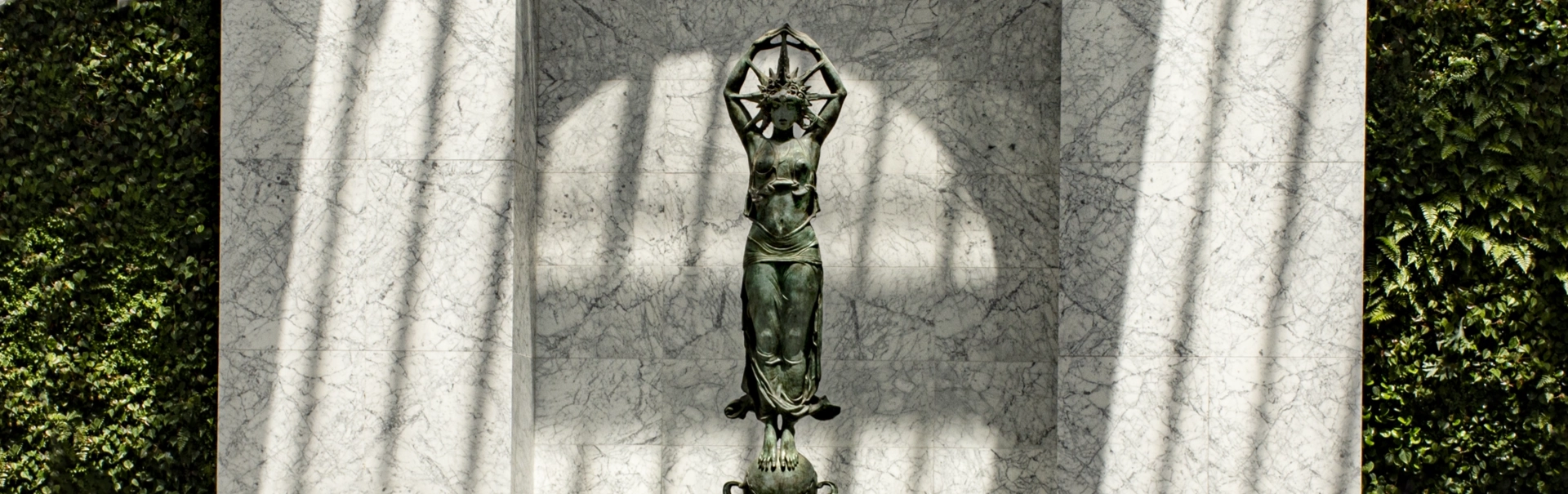
1 Top Banner: Cropped The Hand of Man (1904) | Alfred Stieglitz
Google Art Project | Getty Center, Public domain, via Wikimedia Commons
2 Rodin (1908) | Edward Steichen
Public domain, via Wikimedia Commons
3 Sunshine in the House (1908) | Gertrude Käsebier
Public domain, via Wikimedia Commons
4 Haystack, Snow Effects, Morning (1890) | Claude Monet
Public domain, via Wikimedia Commons
5 Mont Sainte-Victoire (1892) | Paul Cézanne
Public domain, via Wikimedia Commons